
Japan · Recipe
4 min read
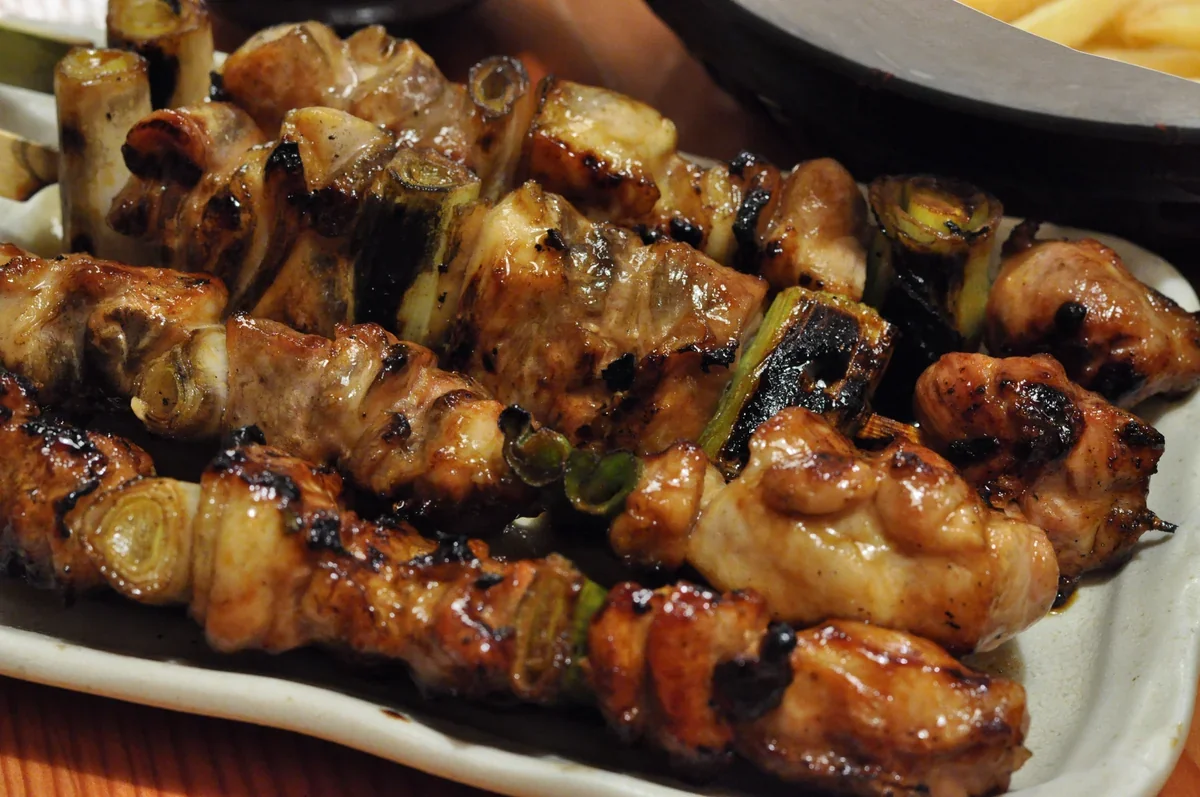
Chicken Yakitori with Spring Onion
Negima is a yakitori skewer of chicken and Japanese long onion. This home version uses chicken thighs and thick spring onions, with a sweet soy glaze brushed on near the end of cooking. Use a grill pan or an outdoor grill. Allow about 35 minutes for six skewers.
On this page
Ingredients
- 400 g boneless, skinless chicken thighs.
- 3 thick spring onions, using the white and pale green sections, or the white part of a small leek.
- 3 tablespoons Japanese soy sauce, 3 tablespoons mirin and 1 tablespoon sugar.
- Neutral oil and 6 metal skewers.
How to grill negima skewers
- Simmer the soy, mirin and sugar until the glaze lightly coats a spoon. Pour part into a separate clean bowl for finishing.
- Cut the chicken and spring onions into pieces about 3 cm long. Thread them alternately, leaving a little space between pieces so the sides can brown.
- Heat a lightly oiled grill pan over medium-high heat. Turn the skewers as they brown. Brush from the cooking bowl during the final turns so the sugar has less time to burn. Check the thickest piece for 74°C (165°F). Transfer to a clean plate and brush with the reserved glaze using a clean brush.
What to use if you are missing negi or mirin
- Japanese long onion: Thick spring onions or the white part of a small leek work for the skewer. Thin spring onion greens cook quickly and can blacken before the chicken is ready. Save the soft tops for serving.
- Mirin: Use a soy, sugar and water glaze if you have no mirin. Junko Ueda’s negima recipe for Kikkoman uses that approach. It gives a simpler sweet-soy glaze, so adjust by taste before it touches any raw chicken. Avoid adding extra soy just for volume.
- Chicken thigh: Breast can work, but it dries out more easily. Keep the pieces even, brush the glaze late and check the thickest piece with a thermometer. Thigh is the more forgiving cut.
- Grill pan: A lightly oiled skillet can brown the skewers. Use a skewer that fits flat inside it. If nothing fits, cook chicken and onion pieces side by side and glaze them at the end.
Get the meat, onion and glaze ready before grilling
Cut the chicken about the same size and avoid cramming it onto the skewer. If the pieces sit unevenly, one side will colour while the thicker pieces lag behind. Prepare two portions of glaze. Use one while cooking, and reserve a second, untouched portion and a clean brush for the finished chicken. Check 74°C (165°F) in the thickest piece with the thermometer probe clear of the metal. FoodSafety.gov gives that as the minimum internal temperature for chicken.
What went wrong with the yakitori?
- Glaze blackens before the chicken is ready. Reduce the heat or move the skewers to a cooler part of the grill. Finish cooking the meat before brushing on a thin coat from the clean reserve. For the next batch, begin glazing closer to the end.
- The chicken steams and stays pale. Dry the unglazed meat before threading it, and cook fewer skewers at a time so moisture can escape. Brown the chicken first, then brush.
- The glaze pools or slides off. Reduce the unused glaze briefly if it is too thin, then brush on a light layer. If it has thickened to a syrup that will not spread, loosen the clean portion with a little water and warm it gently.
- The onion burns before the meat cooks. Use thicker onion sections and evenly sized chicken, or cook about-to-burn pieces off the hottest part of the pan. Confirm the chicken has reached temperature before serving.
Serve hot with rice or cucumber salad.
How to cook several skewers evenly
Put the thickest pieces where you can easily check them with a thermometer. If the pan has a hotter centre and cooler edges, rotate the positions of the skewers as well as turning each one. Where one skewer is ready earlier, move it to a clean plate and keep cooking the others. Treat browning as a cue to turn the meat. Use the thermometer to decide when it is ready to serve.
For a second batch, wipe away burnt glaze after the pan has cooled enough to handle safely. Return the pan to heat and lightly oil it before adding raw skewers. If cooked and raw batches overlap, keep their plates, tongs and glaze brushes separate.
When a different glaze changes the result
A sauce can look comfortably thin while warm and thicken as it cools. Brush a small amount onto one nearly cooked skewer and watch whether it forms a thin coat. If the coating is already dark and sticky after one turn, lower the heat before adding another layer. If the sauce tastes salty before you reduce it, stop reducing and use less per skewer. Reduction concentrates the seasoning as well as thickening the sauce.
Finish the first skewer with the clean reserved glaze and taste it after cooking. If you like a lighter coating, leave the rest at one coat. This gives you a way to adjust sweetness and salt without changing the cooking time of the chicken.
An earlier Asia Otaku recipe for chicken yakitori survives in a 2013 capture. Read the archived article.
Local names and romanization
- 焼き鳥 Japanese
- Romanization: yakitori. Grilled chicken skewers.
- ねぎま Japanese
- Romanization: negima. A skewer with chicken and long onion.
- ねぎ Japanese
- Romanization: negi. Japanese long onion.
- たれ Japanese
- Romanization: tare. The basting sauce.
- みりん Japanese
- Romanization: mirin. A sweet rice seasoning used in this glaze.