
Korea · History
4 min read
Itaewon History: How a Joseon Inn Gave Seoul’s Neighbourhood Its Name
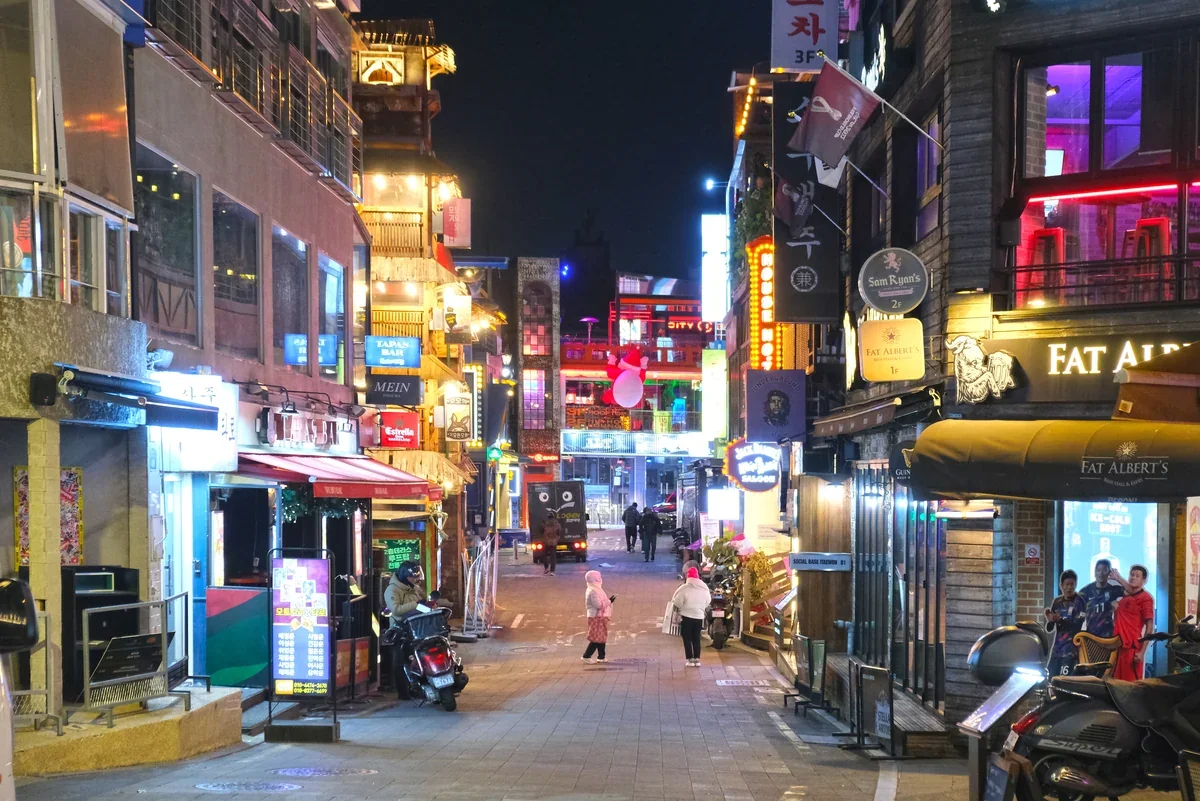
Itaewon is a neighbourhood in Seoul’s Yongsan district. Its name comes from an inn on a route south out of the capital during the Joseon dynasty. The pear-tree story explains one traditional reading of the name. Itaewon’s later reputation as a meeting place for people from different countries grew out of a separate history, including the military presence in Yongsan, local trade and migration. Yongsan History Museum’s account
On this page
What was Itaewon before it became a neighbourhood?
The original Itaewon was a won, a place where travellers on official business could find lodging. It stood near the route that led south from Hanyang, the capital now called Seoul. Think of it as a stop in a travel network. Someone sent out of the capital on government business needed somewhere to stay, and stations like this made it possible to travel in stages.
The inn and the present neighbourhood also occupy different points on the map. The Academy of Korean Studies places the old inn around today’s Hangangno 2-ga, west of Itaewon-dong. The name survived as the area changed. Standing by Itaewon Station today puts you in the district that inherited it.
The old inn explains the name. The postwar shops and later migrant communities explain how a different place came to be known by it.
Does Itaewon mean “pear-tree inn”?
The first character in today’s written form, 梨泰院, means pear, and the last character is used for the inn. One account connects that spelling with pear trees in the area. Historical records use other characters for the same spoken name, so the orchard story is best understood as one explanation of the spelling. The stronger historical connection is the neighbourhood’s inheritance of the old inn’s name. Academy of Korean Studies on the old inn and its name
What changed after the Korean War?
Yongsan’s military presence reshaped who shopped and spent time nearby. In the decades after the Korean War, Itaewon’s shops and entertainment venues served American military customers as well as Seoul residents. The proximity mattered in ordinary ways. A shop could build a trade in clothes, shoes or other goods sought by customers from the base, and a music venue could find an audience for records that were familiar to people stationed far from home. Seoul Metropolitan Government’s neighbourhood history
How did Itaewon become known outside the base?
The 1986 Asian Games and the 1988 Seoul Olympics brought international attention to a district that already had shops serving visitors. Seoul’s account also describes migrant workers from the Middle East and Africa arriving from the early 1990s. People came in different decades for different reasons. Their businesses and communities helped make the area more than a shopping district tied to the garrison. Korea Tourism Organization’s Itaewon profile
A simple timeline for reading the neighbourhood
- Joseon era: The old way station helped travellers on official business leave Hanyang in stages. Its name outlived the inn.
- After the Korean War: Commerce and entertainment grew around customers from the nearby Yongsan military base and from Seoul itself.
- From the 1980s and 1990s: International sporting events drew attention to an established shopping area. Later migration added different businesses and community networks.
Keep those layers in view when reading a modern map. The modern station identifies a neighbourhood, while an old account may point to the lodging stop farther west. Accounts of shopping or migration tell you about later streets and the people who used them. They answer different historical questions even though they use the same place name.
Reading old descriptions of Itaewon
To understand the difference between the old inn and the modern neighbourhood, start with the two places on a map. Hangangno 2-ga is the modern reference point used by the Academy of Korean Studies for the old lodging stop. Itaewon Station marks a different area that inherited its name. An account can reasonably use the same spoken name for both places while describing different locations and centuries.
Descriptions of the area’s shops and venues need the same care. A postwar account of a club or clothing store tells us what part of the street served military customers. It gives a narrower view than the stories of people who later came to work, open businesses or make a home nearby. When you run into a description of “old Itaewon,” check whether it is talking about the Joseon road network, the garrison-era shopping streets or the neighbourhood as migration changed it. Each answers a different part of the question.
Local names and romanization
- 이태원 Korean
- Romanization: Itaewon. The neighbourhood’s name. The article also discusses its Hanja spelling 梨泰院.
- 원 Korean
- Romanization: won. In this historical context, a lodging stop for travellers on official business.
- 한양 Korean
- Romanization: Hanyang. The historical name of the Joseon capital.
- 한강로2가 Korean
- Romanization: Hangangno 2-ga. The modern area cited for the former inn.